Sexually Transmitted Diseases or STDs are diseases that
spread from one person to another via sexual contact. It spreads when a
person carrying the disease-causing organism engages in any kind of
sexual activity including, oral, vaginal, anal or genital with another
partner without using protection.
The best way to prevent
an STD is to practice safe sex at all times. Even so, the number of STD
cases is on a rise as many people do not recognise the disease quickly
and therefore continue to spread it further.
This article highlights some of the most common STDs one should watch out for.
Chlamydia
- Chlamydia is one of the most common STD’s. It is caused by a
bacterium called Chlamydia trachomatis which affects a man’s penile
urethra and a woman’s cervix. Many times people don’t realise they’ve
contracted the disease for months or even years. The most common
symptoms to diagnose chlamydia include burning while urinating, abnormal
genital discharge and pain during intercourse. A person can be best
protected from Chlamydia by practicing safe sex. Chlamydia is also
curable.
AIDS/HIV - AIDS/HIV is probably the most
commonly known and feared STD. It is caused by a virus called the human
immunodeficiency virus, which can be found in any bodily fluids
including semen, blood, or breast milk. Most people who’ve contracted
the disease show symptoms like flu, fatigue, swollen lymph glands, skin
rash, nausea within two months. Although there is no complete cure for
AIDS, if diagnosed early, it can be prevented from progressing with a
combination of highly active anti-retroviral drugs.
Herpes - Herpes
is a silent disease and one may not even know about it if your partner
has it. It is contagious and can spread via skin to skin touch. For
example, mouth to genital or genital to genital. There are times where
people don’t show visible sores but the most common indication of herpes
are sores that arise on the penis, vagina, anus or mouth. Even though
there is no permanent cure to herpes, there are medical treatments to
treat it. Once infected, this virus never goes away and keeps
reoccurring two to four times a year.
Crabs -
Crabs or pubic lice are mites that lodge themselves in your genitals,
hands, fingers or chest hair. They appear as eggs or lice attached to
the hair and can spread if left untreated. They cause a person to itch
the affected area. Crabs are passed via sexual contact but they can also
be contracted from infected bed linen, clothing or toilet seats.
Syphilis -
Syphilis is a serious STD, which may not always show symptoms and can
be very dangerous. It is caused by a bacterial infection called
Treponema Pallidum and is transmitted via direct contact when there is
no condom involved. Although symptoms are rare, sores around the rectum,
vagina, mouth or genital area indicate the presence of the syphilis
virus. There can be one or more sores that appear like big bug bites
that are painless. They could also be accompanied by hair loss, sore
throat or patchy white skin rash. The easiest way to diagnose it is by
testing your blood. The good part is that it can be treated by
penicillin or tetracycline. But if left untreated it can cause severe
problems like blindness, brain or heart damage or death.
Genital Warts -
Genital warts are the most commonly contracted STD. They are caused by a
virus called Human Papilloma, which pops up in form of warts around the
genital area, hence the name genital warts. Once a person is infected,
it may take about three months for the warts to appear. These warts are
highly contagious and can cause other symptoms like muscle aches, pain
while urinating or swollen glands near the genitals. Even if a person
doesn’t see any warts but experiences the following symptoms, he/she
should visit a doctor immediately before it gets serious. Unfortunately,
this virus cannot be permanently treated although the warts caused by
it can be removed every time they appear.
READ MORE: http://news.naij.com/54486.html
Tuesday, 17 December 2013

Seeing Skin in a Syrian Refugee Camp
All day long in Mafraq, an impoverished corner of Jordan that has
been swarmed by Syrian refugees, women kept pulling me aside and
unzipping their abayas. They spotted me amid the male aid workers,
grabbed my hand and pulled me to a corner to reveal the scars on their
necks, their stomachs, their hips.
I'd crossed the Jordanian border from Israel earlier that morning, on assignment to report about Israeli aid to Syrian refugees. I was ready to see hunger and homelessness. I hadn't expected, however, to be shown so much skin.
One Syrian woman named Asma revealed a gash along her belly that I thought was a scar from a caesarian section. "Baby?" I asked her, hooking my arms into an imaginary cradle to compensate for my lack of Arabic.
"No, not baby," she said. Then her fingers waved desperately and she lifted her arms above her head. "Boom!" she said. She pulled out a cheap cell phone and showed me a grainy video of her dying husband writhing on a Syrian street. She couldn't have been more clear.

At a tiny desert refugee camp of Syrians who had fled the crowding and disease of the larger tent cities of Zaatari and Mreijeb Al Fhoud, a teenaged girl named Firdous dragged me to semi-privacy behind a van and carefully unwrapped her hijab. On her breastbone, she showed me a smattering of thick purple bruises. They looked like berries, the kind that bleed into pancakes and turn the batter blue, but they were burst blood vessels. I told her in English that I would help her find a doctor, knowing that she couldn't understand me, which gave me an excuse to lie.
Our translator had been detained on the Israeli side of the border, held back from crossing with us thanks to an unpaid cell phone bill, which in these parts is enough to put a freeze on your passport. The Israeli aid workers who had brought me were pressed for time and walking a tenuous line in their coordination with Jordanian groups on the ground. I was an untrained witness to a chaotic dump of dried lentils and laundry detergent, with no medical skills and only a smattering of Arabic vocabulary. All I could do for these women was be a witness to their wounds.

Hours later, when I was back across the border in my clean, light-filled Tel Aviv apartment, eating takeout Chinese on the sofa and watching "Homeland" with my husband, I began to think about those women's bodies. My assignment that day had been to write about the food parcels the refugees were receiving from Israel, and I had gathered enough information to do so. But the nakedness had been so unbridled, and worst of all, it had been so very easy to leave behind.
It's simple in Israel to get into a car, cross a border, and in a matter of minutes find yourself in an alternate universe. For Americans at home, such culture shock usually takes a jet plane. Here, where the conflicts are compact and the borders more pockmarked, the world's headlines are always just a short drive away.

And I had a ride right to them. I was picked up in Israel at 6 a.m. by a carload of aid workers, and by 9 a.m. we were at the Beit Shean border crossing, our passports being scrutinized by a surly Jordanian customs officer. It wasn't even lunchtime yet when Asma unzipped her robe and pulled up the shirt beneath to show me her belly. By dinnertime, Firdous and her family were probably still huddled in their tent in an unmapped swath of Jordanian desert, gnashing out that afternoon's sandstorm while I was back home in Tel Aviv slurping wonton soup.
This fall, while U.S. President Barack Obama wavered over whether or not to exact revenge on Syrian President Bashar Assad for dropping chemical weapons on his own people, Tel Aviv braced itself. We are close enough, we know, to be the first line of attack. We are a western enclave in a region turning more and more eastern; the sacrificial lamb in a den of spring-stoked wolves. I love Tel Aviv because it is like a nation unto itself; a city of beaches and bohemians and non-kosher bistros that is my sanctuary from the Israeli headaches that beckon the moment you reach its outskirts.

So it made sense that I would touch the broken nerves of the Syrian conflict in neighboring Jordan and make it home to my Tel Aviv oasis in a handful of hours. That is the irony of life here; to live in Tel Aviv, one must stoke a willful ignorance of the ugliness of the Middle East. But our sanctuary is imaginary. After I had showered away the day's grime and joined my husband on the sofa that night, I spied the unopened cardboard boxes containing our gas masks stacked in the corner.
We will never have to open them, he assured me last month when he brought them home after hours in line at the distribution center. And we can always run to the shelter.
Better safe than sorry, I said in return, because there is strange comfort in adages.
Coming home from Jordan, however, those silent cardboard boxes seemed to mock me. Tel Aviv remains secure, our gas masks mere props in someone else's war. And I am left with the unsettling realization that I went to that refugee camp to take home a story, but brought nothing to give.

Maybe it was because of the shame that I lay in bed that night, straining my ears for the air raid siren. It's easy to say I was simply on edge after a long day, but I think a small part of me was hoping to hear it. Its wail would rise up in the night, shattering the silence like a gash across skin.
But the night remained still, and I, wishing for absolution, curled into my clean sheets and waited for sleep.
I'd crossed the Jordanian border from Israel earlier that morning, on assignment to report about Israeli aid to Syrian refugees. I was ready to see hunger and homelessness. I hadn't expected, however, to be shown so much skin.
One Syrian woman named Asma revealed a gash along her belly that I thought was a scar from a caesarian section. "Baby?" I asked her, hooking my arms into an imaginary cradle to compensate for my lack of Arabic.
"No, not baby," she said. Then her fingers waved desperately and she lifted her arms above her head. "Boom!" she said. She pulled out a cheap cell phone and showed me a grainy video of her dying husband writhing on a Syrian street. She couldn't have been more clear.
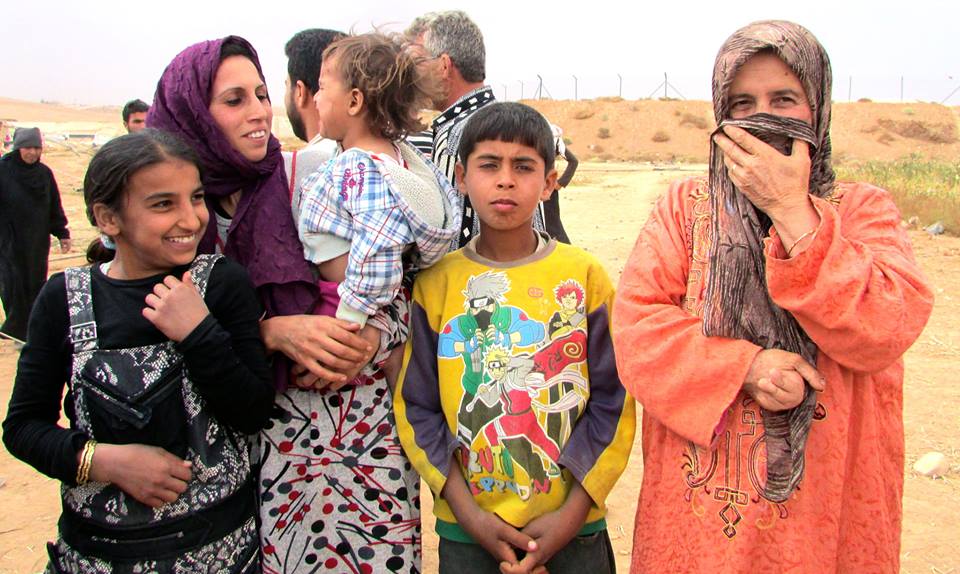
At a tiny desert refugee camp of Syrians who had fled the crowding and disease of the larger tent cities of Zaatari and Mreijeb Al Fhoud, a teenaged girl named Firdous dragged me to semi-privacy behind a van and carefully unwrapped her hijab. On her breastbone, she showed me a smattering of thick purple bruises. They looked like berries, the kind that bleed into pancakes and turn the batter blue, but they were burst blood vessels. I told her in English that I would help her find a doctor, knowing that she couldn't understand me, which gave me an excuse to lie.
Our translator had been detained on the Israeli side of the border, held back from crossing with us thanks to an unpaid cell phone bill, which in these parts is enough to put a freeze on your passport. The Israeli aid workers who had brought me were pressed for time and walking a tenuous line in their coordination with Jordanian groups on the ground. I was an untrained witness to a chaotic dump of dried lentils and laundry detergent, with no medical skills and only a smattering of Arabic vocabulary. All I could do for these women was be a witness to their wounds.
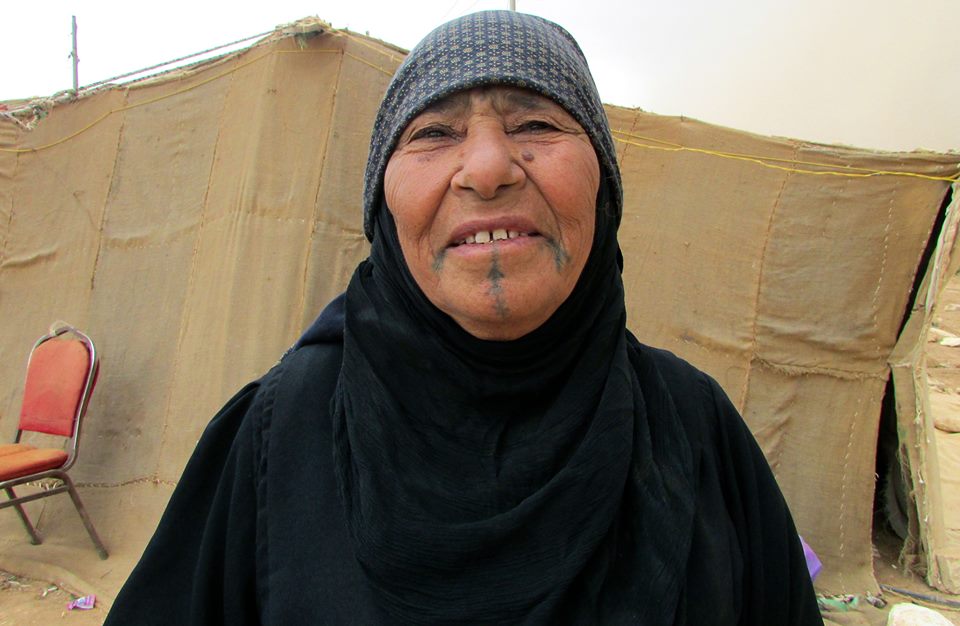
Hours later, when I was back across the border in my clean, light-filled Tel Aviv apartment, eating takeout Chinese on the sofa and watching "Homeland" with my husband, I began to think about those women's bodies. My assignment that day had been to write about the food parcels the refugees were receiving from Israel, and I had gathered enough information to do so. But the nakedness had been so unbridled, and worst of all, it had been so very easy to leave behind.
It's simple in Israel to get into a car, cross a border, and in a matter of minutes find yourself in an alternate universe. For Americans at home, such culture shock usually takes a jet plane. Here, where the conflicts are compact and the borders more pockmarked, the world's headlines are always just a short drive away.

And I had a ride right to them. I was picked up in Israel at 6 a.m. by a carload of aid workers, and by 9 a.m. we were at the Beit Shean border crossing, our passports being scrutinized by a surly Jordanian customs officer. It wasn't even lunchtime yet when Asma unzipped her robe and pulled up the shirt beneath to show me her belly. By dinnertime, Firdous and her family were probably still huddled in their tent in an unmapped swath of Jordanian desert, gnashing out that afternoon's sandstorm while I was back home in Tel Aviv slurping wonton soup.
This fall, while U.S. President Barack Obama wavered over whether or not to exact revenge on Syrian President Bashar Assad for dropping chemical weapons on his own people, Tel Aviv braced itself. We are close enough, we know, to be the first line of attack. We are a western enclave in a region turning more and more eastern; the sacrificial lamb in a den of spring-stoked wolves. I love Tel Aviv because it is like a nation unto itself; a city of beaches and bohemians and non-kosher bistros that is my sanctuary from the Israeli headaches that beckon the moment you reach its outskirts.
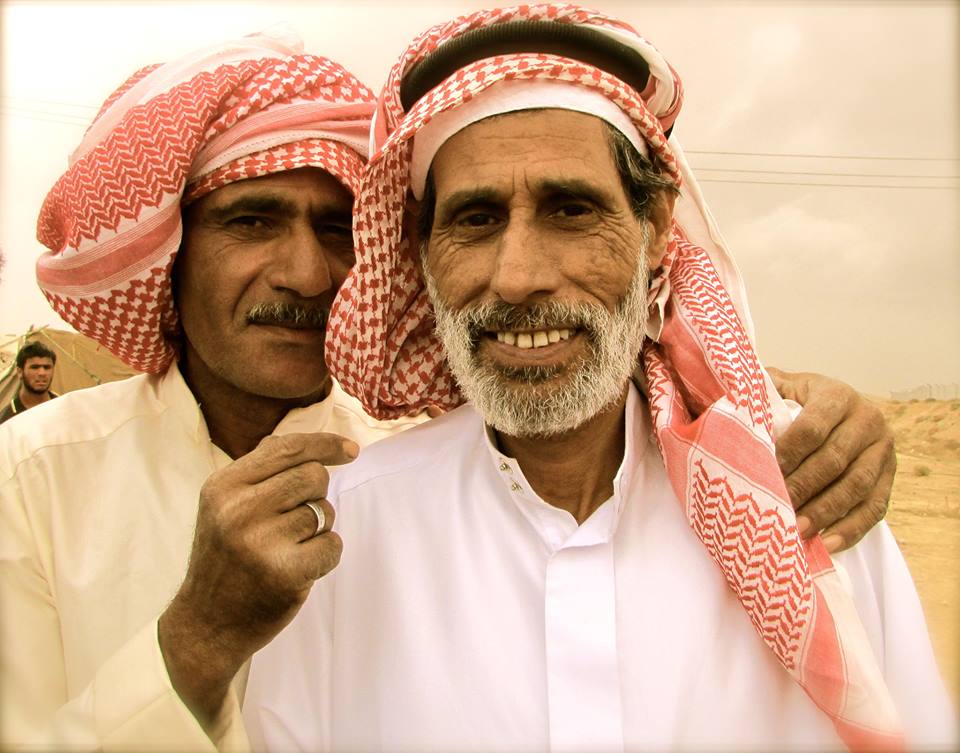
So it made sense that I would touch the broken nerves of the Syrian conflict in neighboring Jordan and make it home to my Tel Aviv oasis in a handful of hours. That is the irony of life here; to live in Tel Aviv, one must stoke a willful ignorance of the ugliness of the Middle East. But our sanctuary is imaginary. After I had showered away the day's grime and joined my husband on the sofa that night, I spied the unopened cardboard boxes containing our gas masks stacked in the corner.
We will never have to open them, he assured me last month when he brought them home after hours in line at the distribution center. And we can always run to the shelter.
Better safe than sorry, I said in return, because there is strange comfort in adages.
Coming home from Jordan, however, those silent cardboard boxes seemed to mock me. Tel Aviv remains secure, our gas masks mere props in someone else's war. And I am left with the unsettling realization that I went to that refugee camp to take home a story, but brought nothing to give.
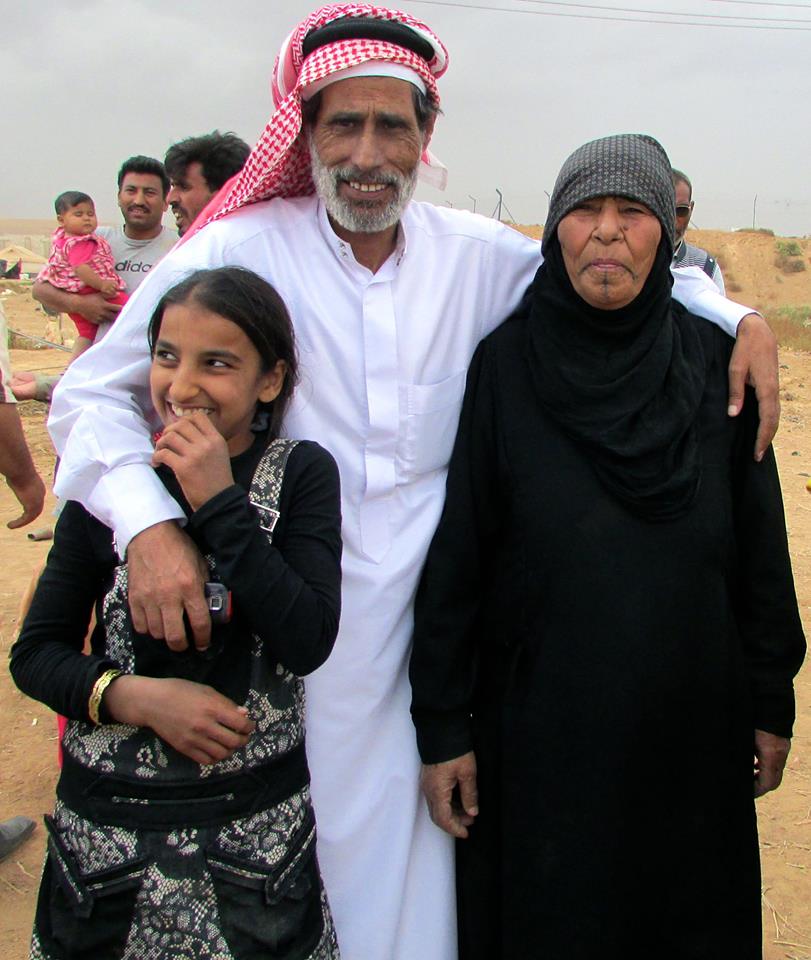
Maybe it was because of the shame that I lay in bed that night, straining my ears for the air raid siren. It's easy to say I was simply on edge after a long day, but I think a small part of me was hoping to hear it. Its wail would rise up in the night, shattering the silence like a gash across skin.
But the night remained still, and I, wishing for absolution, curled into my clean sheets and waited for sleep.
NOT KIDDING: Sen. Yerima Divorces 17-Yr-Old To Marry 15-Yr-Old
Three years after marrying a 14 year old Egyptian girl named
Marian, former Zamfara state governor and serving senator of the federal
republic of Nigeria, Sen. Ahmed Yerima, has divorced her to marry a
younger girl, reports provide.

According to the information available, Sen. Yerima and four men, said to be members of the Zamfara State House of Assembly were in Egypt a few weeks ago for the wedding fathia of a new bride. It has been learnt that the girl is 15 years old.
Mr. Yerima has one child from Marian, who is 17 now. The reason he divorced her is to enable him take a new wife as he's not allowed more than 4 wives.
The Senator is alleged to have married and divorced a few women in the last few years but has never changed his first three wives, only the fourth ones.
It would be recalled tha Sen. Ahmed Yerima this year was strongly against the deletion of the section of the 1999 constitution which pegged the official marriage age in Nigeria as 18 year, saying it was anti-Islam.
READ MORE: http://news.naij.com/54420.html?new_letter
According to the information available, Sen. Yerima and four men, said to be members of the Zamfara State House of Assembly were in Egypt a few weeks ago for the wedding fathia of a new bride. It has been learnt that the girl is 15 years old.
Mr. Yerima has one child from Marian, who is 17 now. The reason he divorced her is to enable him take a new wife as he's not allowed more than 4 wives.
The Senator is alleged to have married and divorced a few women in the last few years but has never changed his first three wives, only the fourth ones.
It would be recalled tha Sen. Ahmed Yerima this year was strongly against the deletion of the section of the 1999 constitution which pegged the official marriage age in Nigeria as 18 year, saying it was anti-Islam.
READ MORE: http://news.naij.com/54420.html?new_letter
Saturday, 14 December 2013
THE WOMEN WHO SOLD THEIR DAUGHTER INTO SEX SLAVERY

A neighborhood in Cambodia is a
global hotspot for the child sex trade. The people selling the
children? Too often, their parents. CNN Freedom Project and Mira
Sorvino, award-winning actress and human rights activist, investigate.
By Tim Hume, Lisa Cohen and Mira Sorvino
Photography by Jeremie Montessuis for CNN
Photography by Jeremie Montessuis for CNN
Phnom Penh, Cambodia (CNN)
When a poor
family in Cambodia fell afoul of loan sharks, the mother asked her
youngest daughter to take a job. But not just any job.
The girl, Kieu, was taken to a hospital and
examined by a doctor, who issued her a "certificate of virginity." She
was then delivered to a hotel, where a man raped her for two days.
Kieu was 12 years old.
"I did not know what the job was," says Kieu, now
14 and living in a safehouse. She says she returned home from the
experience "very heartbroken." But her ordeal was not over.
After the sale of her virginity, her mother had Kieu taken to a brothel where, she says, "they held me like I was in prison."
She was kept there for three days, raped by three
to six men a day. When she returned home, her mother sent her away for
stints in two other brothels, including one 400 kilometers away on the
Thai border. When she learned her mother was planning to sell her again,
this time for a six-month stretch, she realized she needed to flee her
home.
"Selling my daughter was heartbreaking, but what
can I say?" says Kieu's mother, Neoung, in an interview with a CNN crew
that travelled to Phnom Penh to hear her story.

Cambodia's hidden child brothels
Karaoke bars are a common front for child prostitution. Mira Sorvino details going behind the scenes of this illicit trade.
Like other local mothers CNN spoke to, she blames
poverty for her decision to sell her daughter, saying a financial crisis
drove her into the clutches of the traffickers who make their
livelihoods preying on Cambodian children.
"It was because of the debt, that's why I had to
sell her," she says. "I don't know what to do now, because we cannot
move back to the past."
It is this aspect of Cambodia's appalling child sex
trade that Don Brewster, a 59-year-old American resident of the
neighborhood, finds most difficult to countenance.
"I can't imagine what it feels like to have your
mother sell you, to have your mother waiting in the car while she gets
money for you to be raped," he says. "It's not that she was stolen from
her mother -- her mother gave the keys to the people to rape her."
Brewster, a former pastor, moved from California to
Cambodia with wife Bridget in 2009, after a harrowing investigative
mission trip to the neighborhood where Kieu grew up -- Svay Pak, the
epicenter of child trafficking in the Southeast Asian nation.
"Svay Pak is known around the world as a place
where pedophiles come to get little girls," says Brewster, whose
organization, Agape International Missions (AIM), has girls as young as
four in its care, rescued from traffickers and undergoing rehabilitation
in its safehouses.
In recent decades, he says, this impoverished
fishing village – where a daughter's virginity is too often seen as a
valuable asset for the family – has become a notorious child sex
hotspot.
"When we came here three years ago and began to
live here, 100% of the kids between 8 and 12 were being trafficked,"
says Brewster. The local sex industry sweeps up both children from the
neighborhood -- sold, like Kieu, by their parents – as well as children
trafficked in from the countryside, or across the border from Vietnam.
"We didn't believe it until we saw vanload after vanload of kids."
Global center for pedophiles
Weak law enforcement, corruption, grinding poverty
and the fractured social institutions left by the country's turbulent
recent history have helped earn Cambodia an unwelcome reputation for
child trafficking, say experts.
UNICEF estimates that children account for a third of the 40,000-100,000 people in the country's sex industry.
Svay Pak, a dusty shantytown on the outskirts of the Cambodian capital Phnom Penh, is at the heart of this exploitative trade.
As one of the most disadvantaged neighborhoods in
one of Asia's poorest countries – nearly half the population lives on
less than $2 per day -- the poverty in the settlement is overwhelming.
The residents are mostly undocumented Vietnamese migrants, many of whom
live in ramshackle houseboats on the murky Tonle Sap River, eking out a
living farming fish in nets tethered to their homes.

Svay Pak, an impoverished neighborhood on the outskirts of Phnom
Penh, is the epicenter of Cambodia's child sex trade. Many of its
residents are undocumented Vietnamese migrants, living in a community of
ramshackle houseboats connected by rickety walkways.
It's a precarious existence. The river is fickle,
the tarp-covered houseboats fragile. Most families here scrape by on
less than a dollar a day, leaving no safety net for when things go wrong
– such as when Kieu's father fell seriously ill with tuberculosis, too
sick to maintain the nets that contained their livelihood. The family
fell behind on repayments of a debt.
In desperation, Kieu's mother, Neoung, sold her
virginity to a Cambodian man of "maybe more than 50," who had three
children of his own, Kieu says. The transaction netted the family only
$500, more than the $200 they had initially borrowed but a lot less than
the thousands of dollars they now owed a loan shark.
So Neoung sent her daughter to a brothel to earn more.
"They told me when the client is there, I have to
wear short shorts and a skimpy top," says Kieu. "But I didn't want to
wear them and then I got blamed." Her clients were Thai and Cambodian
men, who, she says, knew she was very young.

Don Brewster, a former pastor from California, is the founder and
director of Agape International Missions, an organization dedicated to
rescuing and rehabilitating the victims of child trafficking in Cambodia
and smashing the networks that exploit them. He moved to Cambodia with
his wife in 2009 after a harrowing investigative mission trip to the
neighborhood.
"When they sleep with me, they feel very happy," she says. "But for me, I feel very bad."
The men who abuse the children of Svay Pak fit a
number of profiles. They include pedophile sex tourists, who actively
seek out sex with prepubescent children, and more opportunistic
"situational" offenders, who take advantage of opportunities in brothels
to have sex with adolescents.
Sex tourists tend to hail from affluent countries,
including the West, South Korea, Japan and China, but research suggests
Cambodian men remain the main exploiters of child prostitutes in their
country.
Mark Capaldi is a senior researcher for Ecpat
International, an organization committed to combating the sexual
exploitation of children.
"In most cases when we talk about child sexual
exploitation, it's taking place within the adult sex industry," says
Capaldi. "We tend to often hear reports in the media about pedophilia,
exploitation of very young children. But the majority of sexual
exploitation of children is of adolescents, and that's taking place in
commercial sex venues."
The abusers would often be local, situational
offenders, he says. Research suggests some of the Asian perpetrators are
"virginity seekers," for whom health-related beliefs around the
supposedly restorative or protective qualities of virgins factor into
their interest in child sex.
Whatever the profile of the perpetrator, the abuse
they inflict on their victims, both girls and boys, is horrific.
Trafficked children in Cambodia have been subjected to rape by multiple
offenders, filmed performing sex acts and left with physical injuries
-- not to mention psychological trauma -- from their ordeals, according
to research.
In recent years, various crackdowns in Svay Pak
have dented the trade, but also pushed it underground. Today, Brewster
says, there are more than a dozen karaoke bars operating as brothels
along the road to the neighborhood, where two years ago there was none.
Even today, he estimates a majority of girls in Svay Park are being
trafficked.
Virgins for sale
Kieu's relative, Sephak, who lives nearby, is
another survivor. (CNN is naming the victims in this case at the request
of the girls themselves, as they want to speak out against the practice
of child sex trafficking.)
Sephak was 13 when she was taken to a hospital,
issued a certificate confirming her virginity, and delivered to a
Chinese man in a Phnom Penh hotel room. She was returned after three
nights. Sephak says her mother was paid $800.
"When I had sex with him, I felt empty inside. I
hurt and I felt very weak," she says. "It was very difficult. I thought
about why I was doing this and why my mom did this to me." After her
return, her mother began pressuring her daughter to work in a brothel.

Toha listens to her mother explain how she came to sell her to sex
traffickers. She no longer lives with her family, opting instead to
live in a residence for trafficking survivors run by Brewster's
organization -- but still provides her family some financial support
from her new job.
Not far away from Sephak's family home, connected
to the shore via a haphazard walkway of planks that dip beneath the
water with each footfall, is the houseboat where Toha grew up.
The second of eight children, none of whom attend
school, Toha was sold for sex by her mother when she was 14. The
transaction followed the same routine: medical certificate, hotel, rape.
About two weeks after she returned to Svay Pak, she
says, the man who had bought her virginity began calling, requesting to
see her again. Her mother urged her to go. The pressure drove her to
despair.
"I went to the bathroom and cut my arms. I cut my
wrists because I wanted to kill myself," Toha says. A friend broke down
the door to the bathroom and came to her aid.
Mothers as sex traffickers
CNN met with the mothers of Kieu, Sephak and Toha
in Svay Pak to hear their accounts of why they chose to expose their
daughters to sexual exploitation.
Kieu's mother, Neoung, had come to Svay Pak from
the south of the country in search of a better life when Kieu was just a
baby. But life in Svay Pak, she would learn, wasn't easy.

Why Cambodia?
How has this Southeast Asian nation become a hotspot for pedophiles? Poverty, corruption and a brutal reign of terror have all played a part in making Cambodian children vulnerable to adult predators.
When her husband's tuberculosis rendered him too
sick to properly maintain the nets on the family's fish pond, the family
took on a $200 loan at extortionate rates from a loan shark. It has now
ballooned to more than $9,000. "The debt that my husband and I have is
too big, we can't pay it off," she says. "What can you do in a situation
like this?"
"Virginity selling" was widespread in the
community, and Neoung saw it as a legitimate option to make some income.
"They think it is normal," she says. "I told her, 'Kieu, your dad is
sick and can't work… Do you agree to do that job to contribute to your
parents?'"
"I know that I did wrong so I feel regret about it, but what can I do?" she says. "We cannot move back to the past."
But she adds she would never do it again.
Sephak's mother, Ann, has a similar story. Ann
moved to Svay Pak when her father came to work as a fish farmer. She and
her husband have serious health problems.
"We are very poor, so I must work hard," she says. "It's still not enough to live by and we're sick all the time."
The family fell on hard times. When a storm roared
through the region, their house was badly damaged, their fish got away,
and they could no longer afford to eat. In crisis, the family took out a
loan that eventually spiraled to about $6000 in debt, she says.
With money-lenders coming to her home and
threatening her, Ann made the decision to take up an offer from a woman
who approached her promising big money for her daughter's virginity.
"I saw other people doing it and I didn't think it
through," she says. "If I knew then what I know now, I wouldn't do that
to my daughter."
On her houseboat, as squalls of rain lash the
river, Toha's mother Ngao sits barefoot before the television taking
pride of place in the main living area, and expresses similar regrets.
On the wall hangs a row of digitally enhanced portraits of her husband
and eight children. They are dressed in smart suits and dresses,
superimposed before an array of fantasy backdrops: an expensive
motorcycle, a tropical beach, an American-style McMansion.
Life with so many children is hard, she says, so she asked her daughter to go with the men.
She would not do the same again, she says, as she
now has access to better support; Agape International Missions offers
interest-free loan refinancing to get families out of the debt trap, and
factory jobs for rescued daughters and their mothers.

For the children: Mira's journal
Mira Sorvino details her week spent in Cambodia with the CNN Freedom Project meeting victims, government officials and activists working to end child sex trafficking. Read more »
The news of Ngao's betrayal of her daughter has
drawn mixed responses from others in the neighborhood, she says. Some
mock her for offering up her daughter, others sympathize with her
plight. Some see nothing wrong with she did at all.
"Some people say 'It's OK -- just bring your
daughter (to the traffickers) so you can pay off the debt and feel
better,'" says Ngao.
A new future
Not long after her suicide attempt, Toha was sent
to a brothel in southern Cambodia. She endured more than 20 days there,
before she managed to get access to a phone, and called a friend. She
told the friend to contact Brewster's group, who arranged for a raid on
the establishment.
Although children can be found in many brothels
across Cambodia -- a 2009 survey of 80 Cambodian commercial sex premises
found three-quarters offering children for sex – raids to free them are
infrequent.
The country's child protection infrastructure is
weak, with government institutions riven with corruption. Cambodia's
anti-trafficking law does not even permit police to conduct undercover
surveillance on suspected traffickers. General Pol Phie They, the head
of Cambodia's anti-trafficking taskforce set up in 2007 to address the
issue, says this puts his unit at a disadvantage against traffickers.
"We are still limited in prosecuting these
violations because first, we lack the expertise and second, we lack the
technical equipment," he says. "Sometimes, we see a violation but we
can't collect the evidence we need to prosecute the offender."
He admits that police corruption in his country,
ranked 160 of 175 countries on Transparency International's Corruption
Perceptions Index, is hampering efforts to tackle the trade in Svay Pak.
"Police in that area probably do have connections with the brothel
owners," he concedes.

Toha's nightmare is now over. She earns a steady income, weaving
bracelets that are sold in American stores, while she studies for her
future. Her dream is to become a social worker, helping other girls who
have been through the same ordeal.
Brewster believes that corruption was to blame for
nearly thwarting Toha's rescue. In October 2012, after Toha's call for
help, AIM formulated plans with another organization to rescue the teen,
and involved police.
"We get a warrant to shut the place down," recalls
Brewster. "Fifteen minutes later, Toha calls and says, 'I don't know
what happened, the police just came with the owner and took us to a new
place. I'm locked inside and don't know where I am.'"
Fortunately the rescue team were able to establish
Toha's new location, and she and other victims were freed and the
brothel managers arrested – although not before the owners fled to
Vietnam.
Toha's testimony against the brothel managers, however, resulted in their prosecutions.
Last month, at the Phnom Penh Municipal Courthouse,
husband and wife Heng Vy and Nguyeng Thi Hong were found guilty of
procuring prostitution and sentenced to three years in jail. Both were
ordered to pay $1,250 to the court, $5,000 to Toha, and smaller sums to
three other victims.
Brewster was in court to watch the sentencing; a
small victory in the context of Cambodia's child trafficking problem,
but a victory nonetheless.
"Toha's an amazingly brave girl," he says on the
courthouse steps, shortly after the brothel managers were led down to
the cells.
"Getting a telephone when she's trapped in a
brothel to call for help, to saying she would be a witness in front of
the police…. She stood up and now people are going to pay the price and
girls will be protected. What it will do is bring more Tohas, more girls
who are willing to speak, places shut down, bad guys put away."
Like the other victims, Toha now lives in an AIM
safehouse, attending school and supporting herself by weaving bracelets,
which are sold in stores in the West as a way of providing a livelihood
to formerly trafficked children.
In the eyes of the community, having a job has
helped restore to the girls some of the dignity that was stripped from
them by having been sold into trafficking, says Brewster.
It has also given them independence from their
families -- and with that, the opportunity to build for themselves a
better reality than the one that was thrust on them. Now Sephak has
plans to become a teacher, Kieu a hairdresser.
For her part, Toha still has contact with her
mother – even providing financial support to the family through her
earnings – but has become self-reliant. She wants to be a social worker,
she says, helping girls who have endured the same hell she has.
"(Toha)'s earning a good living and she has a dream
beyond that, you know, to become a counselor and to be able to help
other girls," says Brewster. "You see the transformation that's happened
to her."
Child sex trafficking: Why Cambodia?
Svay Pak is a poor fishing village on the outskirt of Cambodia's
capital, Phnom Penh, known globally as a destination for child sex.
It's a place where
mothers sell their own daughters to child traffickers, who supply them
to brothels locally and across the country.
But how has such a perverse trade been able to take root, let alone flourish here?
Mark Capaldi, senior
researcher for Ecpat International, an organization committed to
combating the sexual exploitation of children, says several factors have
made Cambodia a prime destination for child sex offenders.
"Insufficiently enforced
laws, corruption, and the failure to address more overarching problems
such as poverty and the negative side effects of globalization have made
it a challenge for the country to shed the unenviable reputation as a
destination for child sex," he says.
The authors of a 2011
Ecpat International report identified a number of cultural and
sociological factors that made Cambodian children "particularly
vulnerable to adult predators." "It has been observed that Cambodian
children are indeed expected to abide by rules set forth by adults, and
saying 'no' to an adult is not easily tolerated," reads the report.
But what of the
acceptance and willing participation of so many locals, including
parents themselves, in the trade? For Don Brewster -- head of Agape
International Missions, which aids Cambodian child survivors of the sex
trade -- part of the answer as to why so many adults in Svay Pak are
able to abnegate their parental duty to protect may lie in Cambodia's
brutal recent past, which left behind a fractured society.
"What this country went
through was unique in history," says Brewster, of the Khmer Rouge's
systematic destruction of religious, educational and social structures
-- not least of which the family unit -- during its genocidal 1975-79
reign.
When Pol Pot's maniacal
experiment ended, 2 million people were dead, and society's institutions
almost erased. "You lost your educated people and the system of
educating them; you lost the moral compass that Buddhism provided," he
says.
Nigerian Man who tried to behead UK soldier says he loves Al-Qaeda

A photo released by the Ministry of Defence on May 23, 2012 shows soldier Lee Rigby, who was killed in a street in Woolwich, southeast London on May 22
A man accused of the gruesome murder of a British soldier told his trial on Monday that he loves Al-Qaeda and considers the Islamic militants to be his "brothers".
Michael Adebolajo, 28, sat surrounded by security guards as he began giving evidence in his trial at London's Old Bailey court.
He and Michael Adebowale, 22, are accused of murdering 25-year-old soldier Lee Rigby in broad daylight as he walked back to his London barracks in May.
The court
has heard that the pair ran Rigby over with a car before attacking him
with knives. Adebolajo attempted to behead him with a meat cleaver.
4 Saudi female drivers' detention varied by their locations

Four women were detained by traffic police in two Saudi Arabian
cities this week for defying the Kingdom's driving ban, according to all
the women stopped.
In the Red Sea port city
of Jeddah Thursday, two women, Sahar Naseef and Tamador Alyami, were
stopped by police after being spotted in a car on one of the city's main
thoroughfares.
Alyami, who's been an
avid supporter of a two-month-old campaign seeking to gain the right to
drive for women in Saudi Arabia, told CNN she and Naseef were hoping to
get caught.
"We did go driving on a
main street where we know there's a lot of traffic police," explained
Alyami, who was in the passenger seat.
"We're just trying to
push and see how far can we go with this," said Alyami, "because two
women yesterday were caught by police and detained for 10 hours. Today,
in a different city it was totally different. We were caught and stopped
for only two hours."
The woman who drove the
car, Naseef, told CNN she was so convinced she and Alyami would spend
the night in jail, she even packed a toothbrush, some shampoo and an
extra set of clothing.
For Alyami, an author and
columnist who's driven herself around Jeddah five times now, getting
behind the wheel is no longer enough in an extraordinary campaign of
civil disobedience that has seen dozens of women taking to the streets
since October.
"We're asking girls in
different regions to go out," she said, "because we're trying to see if
police in different regions react differently to cases of women
driving."
According to Naseef and
Alyami, the traffic police officer who pulled them over was very kind to
them and even supportive of their cause. They said he told them that
due to protocol, he had to call for backup, and they were soon
surrounded by several more police cars. In the end, Naseef had to sign a
pledge not to drive again in the presence of a male relative before the
women could be released.
One day earlier in the
country's capital, Riyadh, which is in a far more conservative part of
the country, two other women described a far more difficult experience
after being caught driving.
Azza Al-Shamasi and
Bareah Alzubeedy told CNN they were detained at a Riyadh police station
for more than 10 hours after being caught and pulled over by traffic
police.
Al-Shamasi, who was
driving, said when they first started driving down one of Riyadh's main
streets, many male drivers around them were giving them signs of
support. Half an hour later, after a traffic police officer spotted
them, they were pulled over.
"We were then surrounded by six cop cars, and the people who stopped us were quite rude," said Al-Shamasi.
According to Al-Shamasi,
despite the fact that her husband came to the police station shortly
after she was taken there, it still took at least eight more hours
before she was released into his custody.
Alzubeedy explained they were not looking to attract the police's attention, just simply doing what they should be able to do.
"Freedom of movement is a
right," said Alzubeedy, a human rights activist. "This is a right for
women here. There's no law that bars women from driving in Saudi Arabia,
and I hope more women will go out and drive."
Despite repeated attempts, CNN was unable to reach Saudi Arabia's Interior Ministry for comment.
The issue of women
driving is a particularly sensitive and controversial one in Saudi
Arabia, the last country on Earth where females don't have that right.
In recent years, though, more women have challenged the government,
urging officials to overturn the ban and taking to streets in remarkable
displays of civil disobedience. Although women are not allowed to drive
in the ultraconservative Kingdom, there is, in fact, no law barring
them from doing so. But religious edicts are often interpreted to
enforce the prohibition.
In May 2011, Manal
Al-Sharif was jailed for more than a week after posting a video of
herself driving in Saudi Arabia online. She quickly became a hero to
many and inspired dozens of women to drive throughout the streets of
various cities in June of that year.
More recently, in
September, a website for the October 26 Women's Driving Campaign
launched, and within a few weeks, tens of thousands had signed an online
petition calling for an end to the driving ban for women in Saudi
Arabia. As October 26 approached, numerous women filmed themselves
driving in the conservative Kingdom and uploaded those clips to sites
like YouTube.
In the weeks leading up
to October 26, one Saudi cleric gave an interview in which he warned
that Saudi women who drove risked damaging their ovaries. On October 24,
the country's Interior Ministry issued a statement telling women to
stay off the streets.
Despite strong
opposition by conservative quarters in the Kingdom, where a puritanical
strain of Islam is practiced, October 26 saw dozens of women taking to
the streets and driving. The campaign's backers insist the movement is
ongoing and has been a success thus far, while its critics say it has
failed.
In early December, two
of Saudi Arabia's best-known female advocates for lifting the ban on
women driving were also detained after being caught behind the wheel in
the country's capital. Aziza Al-Yousef, who was driving the car, and her
passenger, Eman Al-Nafjan, told CNN they were pulled over and spent a
few hours at a police station in Riyadh until being released into the
custody of their respective husbands.
Death for man who stabbed 22 children in China

Min Yongjun waves a knife at a child at a school on December 14, 2012 in Guangshan County, in central China's Henan province in this screen grab taken from a video released by China's Public Security Bureau
A knife-wielding attacker who stabbed 22 students at a primary school in China was sentenced to death on Friday, a court said.
The Xinyang City Intermediate People's Court said Min Yongjun, 37, was found guilty of intentional homicide and condemned to death, almost a year after he stormed a school in the central province of Henan and slashed dozens of pupils.
No-one was killed but 22 children were injured in the brutal attack, which took place on the same day that 20 children were shot dead at a primary school in Newtown, Connecticut, in the United States.
Surveillance footage showed Min pursuing a group of panicked children through an unguarded school gate, before a group of adults entered equipped with straw brooms and chased him out
Mass killings largely ignored in 2 Nigerian states, rights group says
Horrific ethnic and religious violence resulting in "mass murder" and
other abuses in two central Nigerian states has largely gone ignored by
the authorities, rights group Human Rights Watch said Thursday.
Its report, focused on
Plateau and Kaduna states, is based on interviews with more than 180
witnesses and victims of violence as well as police investigators,
prosecutors, defense lawyers, judges and community leaders.
Many of the victims,
including women and children, Christians and Muslims, "were hacked to
death, burned alive, or shot simply based on their ethnic or religious
identity," said the report, "Leave Everything to God: Accountability for Inter-Communal Violence in Plateau and Kaduna States, Nigeria."
And a seeming culture of
impunity has created a cycle of violence as individuals who find no
recourse elsewhere seek retribution for wrongs done to them, it said.
"Witnesses came forward
to tell their stories, compiled lists of the dead and identified the
attackers, but in most cases nothing was done," said Daniel Bekele,
Africa director at Human Rights Watch.
"The authorities may have
forgotten these killings, but communities haven't. In the absence of
justice, residents have resorted to violence to avenge their losses."
According to the report,
communities in Plateau state have been plagued by sectarian violence for
more than a decade, leaving thousands of Christians and Muslims dead.
"However, the Nigerian
authorities have taken no meaningful steps to address underlying
grievances or, until recently, bring to justice those responsible for
the bloodshed," it said.
Human Rights Watch lays
much of the blame for the culture of impunity at the door of "an already
broken criminal justice system."
It points the finger at
"systemic corruption in the Nigeria Police Force," exacerbated by
political pressure to protect those responsible for violence.
The Nigerian police have not yet responded to repeated CNN requests for comment.
Complex root causes
Much international
attention has focused on recent violent attacks by the Islamist
extremist group Boko Haram in northeastern Nigeria, particularly Borno,
Yobe and Adamawa states.
But the Human Rights Watch report paints a grim picture of life in Kaduna and Plateau states.
Their location in
Nigeria's "Middle Belt," between the largely Muslim north and the
predominantly Christian south, has put them at the intersection of
sectarian strife in the large and unruly West African nation.
"Since 1992, more than
10,000 people in those two states have died in inter-communal
bloodletting; several thousand of those deaths have occurred since 2010
alone," the report said.
The root causes of the violence are complex, it said.
While they often involve
longstanding grievances and disputes, "they are exacerbated both by
divisive state and local government policies that discriminate on ethnic
or religious lines and by the failure of authorities to hold to account
those responsible for the violence."
The strife pits
Hausa-Fulani Muslims -- the largest and most politically powerful group
in northern Nigeria -- against smaller predominantly Christian ethnic
groups, which counted together make up the majority of the population in
the region, it said.
Each side accuses the other of discrimination, oppression and violence to advance its position.
Rights group urges reforms
In Plateau state, episodes of mass violence in 2001, 2004 and 2008 left hundreds of people dead, the report said.
"Following this
violence, federal and state authorities took no meaningful steps to
address underlying grievances and brought no one to justice for the
bloodletting," the researchers said.
The continuing tensions
erupted in 2010, centered on the Plateau state capital of Jos, resulting
in the massacre of hundreds of people, many of them Muslims in rural
communities. While the federal authorities this time stepped in and
prosecuted some suspects, most were not brought to justice, the report
said. Many more sectarian attacks have followed.
In Kaduna state, bloody
episodes of ethnic and sectarian violence in 1992, 2000 and 2002 left
hundreds or more dead -- and few perpetrators were held accountable.
The authorities'
response to different mass killings often follows a similar pattern, the
report said. Police will round up hundreds of "suspects" but fail to
gather evidence properly. This makes it difficult for prosecutors to
file a case against any individual -- and ultimately most charges are
quietly dropped, it said.
Witnesses who did report
crimes said police often took no action; others told researchers they
were afraid to report them or did not do so because they believed the
police would do nothing.
The prosecution of
suspects by federal authorities following the 2010 violence in Plateau
state was an important exception to this pattern, Human Rights Watch
said.
The right group urges
the federal government to ensure mass killings are swiftly and properly
investigated by the police, to bar discriminatory policies that help
fuel ethnic tensions and to treat the intercommunal violence as a
criminal, rather than political, problem.
Other recommendations
include ordering a high-level review of police investigations into
crimes alleged in the report, ensuring police are trained to do their
jobs properly and reforming the police force. The Justice Ministry
should identify why suspects in certain cases were not prosecuted and
prosecute remaining suspects, it said.
"Nigerian authorities
can and should take urgent steps to ensure that the perpetrators of
communal violence, including mass murder, are investigated and
prosecuted, and that victims are provided restitution or compensation
for their enormous losses," the report said.
Arsenal need to find an extra gear against Manchester City
Arsenal will need to improve
if they are to get anything from Manchester City on Saturday, with their
midweek defeat to Napoli rendering them vulnerable.
It's an unfortunate point to
consider that such mundanities might have a drastic effect on the
location of silverware at the end of the season, but the fixture list
can only be ignored for truly exceptional teams. For others, it almost
comes to define a season. While talk of conspiracies and unfair dealings
is ridiculous -- a difficult run at one point means an easy run at
another -- it can never account for the timing of big games and their
potential to influence seasons.
Subscribe to:
Posts (Atom)